


This is a letter about light — excessive or nonexistent. About the glare that overwhelms and the darkness that isolates. About how brightness can numb us, absence of light can disorient, and how, in either case, our sensibility becomes both fragile and precious. It was meant to arrive in your inbox last December, but exams overwhelmed me.
Somewhere mid November, I was preparing to go to sleep and turned the lights off. A few seconds later, the hard and costly earned darkness of our bedroom was interrupted by a flash. Thunder in November, I thought. How strange and exciting. As an old lover of thunderstorms, I got up, and disclosed the heavy curtain. I never got to look at the night sky. In front of me, hanging from the 20 something floor there was a cascade - or maybe the more appropriate word to describe the object is blanket – of white lights, pouring over windows and balconies, tearing apart the already miserable residues of darkness. The hair raising artefact was strobing light at high speed, in crescendos that exhausts your amygdala synapsis in less than a minute, to culminate with thunderlike high voltage flashes leaving the spectator blinded and dazzled, with the urge to cover eyes with whatever at hand and escape o lie down catatonic.
In the days after more of these grotesque hangings of harshness appeared. I ended up putting objects on the curtains’ corners to keep them as close as possible to the walls and to let as little light as possible in the calmness and darkness of our home.
It’s been years since December arrives in November, loud with illumination, relentless in its insistence on visibility. Not the tentative kind that waits for dawn, but an assertive brightness engineered to insist on itself. Streets glow before the afternoon has had a chance to dim. Shop windows spill cold light onto pavements.
This is not the gentle darkness of winter as it once was in my childhood, like a slow dimming that invited rest and inwardness. What we now inhabit is an overexposed season. For every layer of glare we add, we lose a layer of depth.
There is a strange dissonance in this overexposure. The world feels washed out, overlit to the point where subtleties blur. What should feel festive instead feels anesthetizing, a steady hum of stimulation that the nervous system cannot properly metabolize. Simmel’s century old description of the blasé attitude as a survival response to sensory saturation still feels contemporary as December seems to replicate that condition on purpose: the manufactured glow, the relentless visuals, the expectation that brightness alone will generate feeling.
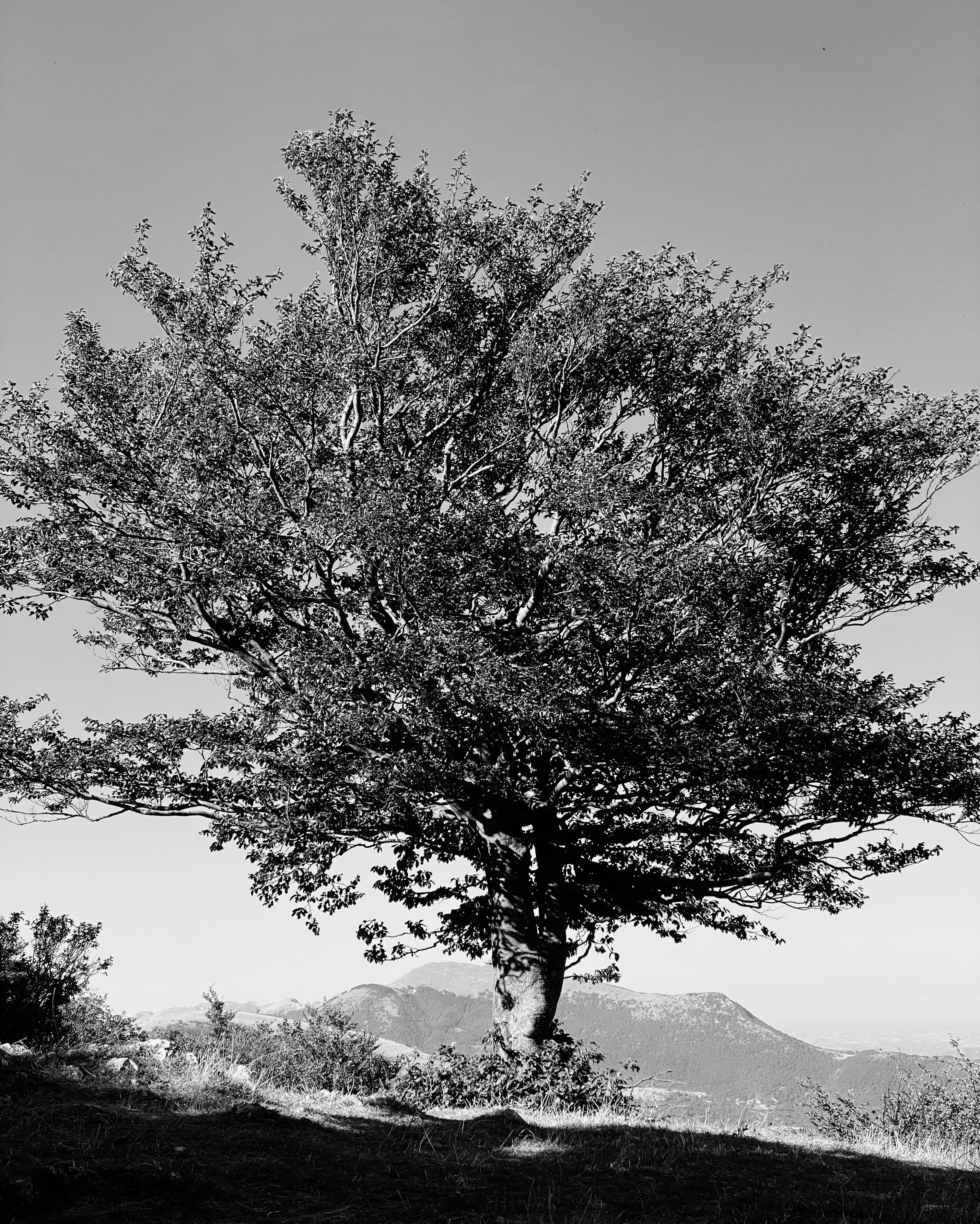
I have been paying attention to the quality of this brightness: how it demands cheerfulness rather than offering warmth, and how it interrupts rather than soothes. I have also been paying closer attention to the quality of this light. Not just aesthetically, but physiologically and psychologically. Artificial illumination now saturates our lives to such a degree that darkness itself has become unfamiliar, suspicious. In winter, when the body expects a slowing down, an inward turn, we are instead flooded with visual stimuli that insist on continuity and cheer as if it were June. The result is not comfort, but fatigue and irritability.
From a physiological perspective, this is not incidental. Chronic exposure to artificial light disrupts circadian rhythms, suppresses melatonin, fractures the natural architecture of rest and wakefulness. The body expects winter to dim, so when it doesn’t, imbalance hits.
Wintering
I’ve been returning to Katherine May’s concept of wintering. Not as metaphor alone, but as a practice. Wintering asks us to stop resisting the dark, to allow withdrawal without shame, to accept that there are seasons in life—personal and collective—when contraction is not a failure but a necessity. It reframes darkness as a condition for restoration rather than a problem to be solved.
In the current moment, wintering feels less like a personal choice and more like a survival skill. The world is too loud, too illuminated, too fractured to be metabolized at full exposure. Wintering offers a way to remain present without demanding resolution. It allows grief to exist without being rushed toward optimism. It resists the pressure to produce coherence where there is none.
Lightkeeping
And yet, wintering alone is not enough. Turning inward without attention to the world risks becoming insulation. This is where my idea of lightkeeping emerges — not as a contradiction to wintering, but as its companion. Not as optimism, and certainly not as consolation.
Lightkeeping is the discipline of keeping sensitivity and attention alive in conditions designed to erode them. It is the refusal to let artificial brightness numb us, and at the same time it’s the refusal to let global darkness annihilate us.
This requires a big deal of discernment because not all light is equal.
The excess brightness of December often functions as distraction and a visual anesthetic against the discomfort. It encourages us to confuse stimulation with warmth, and visibility with care.
Real light, by contrast, is quieter. It does not overwhelm. It orients.
Often, lightkeeping looks embarrassingly small. A single lamp turned on in the early morning, allowing a room to emerge slowly rather than all at once. An intentional pause at dusk, letting the day end without immediately replacing it with screens and overhead light. A quiet corner of the house where illumination is soft enough to allow dreaming. A conversation where pain is not redirected, solved, or softened prematurely.
These are not aesthetic choices. They are regulatory acts as they help the body remain capable of feeling. And feeling, in a time of collective grief, is not optional. It is what keeps us human.
Wintering and lightkeeping meet here, exactly in the restoration of rhythm. Darkness where darkness belongs. Light where it is needed. Neither excessive, nor absent.
I want to frame the lightkeeping as an ethical dimension that matters deeply at this moment. I write from the position of a privileged person, in what results as very dark times worldwide. No, wintering cannot be purely inward. This darkness we are living alongside is not only seasonal or personal; it is global and devastatingly concrete.
Another December and January unfolded against a backdrop of constant devastation that cannot be softened by seasonal rituals. The contrast is unbearable at times.
Entire populations are living through unrelenting darkness: war zones where night does not bring rest but danger; cities reduced to rubble; families displaced, erased, grieving futures that will never arrive. Violence is ongoing, systemic, and increasingly normalized. Imperial logics continue to decide which lives are protected, which are sacrificed, and which are rendered invisible.
We are witnessing suffering in real time — and also witnessing the unevenness of that witnessing. The double standards in global empathy. The hierarchies of grief. The selective outrage. Some deaths are named and mourned; others are explained away, justified, or quietly ignored. Language has become contested terrain. Even compassion is rationed.
All is mediated through screens that deliver devastation alongside advertisements and holiday campaigns.
The psychological dissonance is immense.
Lightkeepers
Many of us live suspended between two impossible positions: the desire to stay awake to the world, and the need to protect ourselves from being undone by it. We are suspended between the urge to witness and the urge to shut down. The result is often numbness, a kind of moral exhaustion. We scroll, we read, we absorb, and at some point the system overloads.
In such conditions, numbness can feel like a survival strategy. But it comes at a cost. When perception dulls, so does moral clarity. The danger of overstimulation is not only exhaustion, but desensitization — the slow erosion of our capacity to distinguish, to grieve, to respond.
It’s destroying our capacity to be lightkeepers.
A lightkeeper is not someone who seeks comfort. A lightkeeper is someone who protects sensitivity. Someone who resists the flattening effect of constant glare—sensory, emotional, ideological. Someone who understands that clarity often emerges not from more light, but from the right kind of light.
Being a lightkeeper is demanding: it asks us to remain human in conditions that reward indifference.
I started writing this letter back in December and only finished it yesterday. I overestimated my ability to juggle everyday life, intensive study, and other passions like reading and writing. It took me three months to complete, but it’s never too late to send you my hopes and good wishes for the year ahead.
May your days in this 2026 be blessed by lightkeepers; may you be the much needed lightkeeper to someone.
Related Letters
The blasé attitude is a fascinating phenomenon: learning about it can suddenly make you aware of your surroundings in a way you hadn’t been before. I wrote about it back in November 2024.
